Is It Illegal to Not Have Trailer Insurance in Cedar Hill?
The legal answer and the practical answer are different, and the gap between them is where most trailer surprises come from.
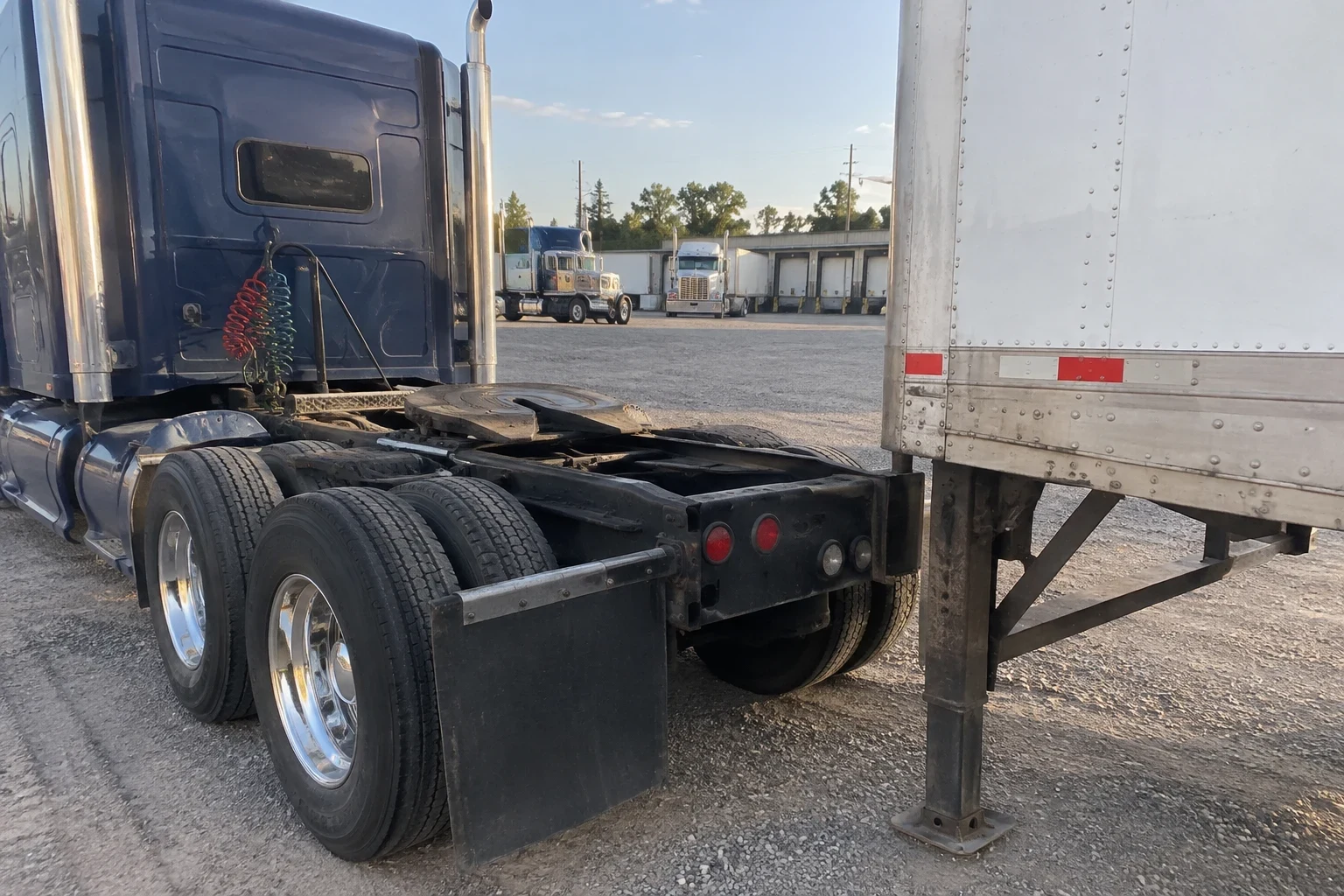
Is it illegal to not have trailer insurance?
In most cases, no law requires a separate policy just for your trailer. The law requires liability coverage for your operation, and that usually extends to a trailer while it is hooked to a covered truck. Contracts, lenders and interchange agreements are what make trailer coverage mandatory. Talk it through at (972) 526-0372.
What the law actually requires when you pull a trailer
If you haul for hire under a DOT number and MC authority, federal rules require you to carry public liability coverage, and your insurer files proof of it with the FMCSA. Carriers running only inside Texas file proof with the state instead. Those filings are about damage and injury you cause to others on the road.
Most commercial auto policies treat a trailer attached to a covered power unit as part of that unit for liability purposes. So the trailer behind your truck is usually not driving around uninsured, even if it never appears by name on your policy. That is why the short answer to the legal question is no.
What the law does not require is coverage for damage to the trailer itself. If it is your trailer and it gets hit, rolled or burned, the law leaves that loss with you.
Where trailer coverage stops being optional
The rules that bite hardest are written in contracts, not statutes. Once you sign one, going without the coverage it names can cost you the load, the trailer pool or the financing.
These are the situations where we most often see trailer coverage required in writing:
- A trailer interchange agreement with another motor carrier, which almost always requires you to cover physical damage to their trailer while it is in your care
- A loan or lease on your own trailer, where the lender expects physical damage coverage naming them on the policy
- Broker and shipper agreements that ask for a certificate of insurance showing specific trailer coverage before you pick up
- Drop-and-hook programs where you hold someone else's equipment for days at a time
Trailer interchange, physical damage and non-owned trailers
These three are easy to mix up, and choosing the wrong one is the most common reason a trailer claim gets denied. Physical damage insurance covers trailers you own and have scheduled on your policy. Trailer interchange insurance covers a trailer owned by another carrier that you are pulling under a written interchange agreement.
Non-owned trailer coverage is a separate idea, usually for borrowed or rented trailers where there is no formal interchange contract. Which one fits depends on who owns the trailer, what paperwork exists and how long the equipment stays with you. We ask about each of those before we suggest anything.
What happens if a trailer is damaged and you have no coverage
You will not get a ticket for skipping trailer physical damage coverage. You will, however, owe the full cost of repairing or replacing the trailer, and if it belongs to another carrier, their agreement likely gives them a direct claim against you.
On a financed trailer, the lender may add its own coverage and bill you for it, often at a higher premium than you would have paid on your own policy. On an interchange, a single uncovered loss can end the relationship and the freight that came with it. For an owner-operator or small fleet, one of those events can be harder to absorb than a year of premium.
How we sort out what your operation really needs
We start by finding the actual requirement before we quote anything. That means reading your interchange agreements, your lease or loan terms and the insurance section of the broker contracts you sign, then matching coverage to what those documents say.
We also ask practical questions: whether you pull your own trailers, someone else's or both, whether you ever drop a trailer and leave it, and whether you run interstate or only in Texas. Carriers around Cedar Hill, Midlothian and Grand Prairie often mix all three in the same month, so the answer is rarely one line on a policy. Getting it right at the start keeps you from paying for coverage you do not need, or finding the gap after a loss.
More questions about trailer coverage
- Does my liability still cover the trailer when it is unhooked?
- Often not in the same way. A parked, detached trailer can fall outside the auto liability on your truck, so it is worth checking how your policy treats unattached equipment if you drop trailers regularly.
- Do I need trailer interchange coverage for a one-time borrowed trailer?
- If there is a written interchange agreement, the agreement decides, and it usually requires coverage. Without one, non-owned trailer coverage may be the better fit, and we can explain the difference on the phone.
- Will a broker ask to see trailer coverage?
- Many do. They may ask for a certificate of insurance listing trailer interchange or physical damage limits before tendering a load, especially on drop-and-hook freight.
- Does a hotshot gooseneck trailer need its own coverage?
- Liability usually follows it while it is attached to your covered truck. Damage to the gooseneck itself needs physical damage coverage, and a lender will typically require it if the trailer is financed.
Find out which trailer coverage your contracts call for
Have your interchange agreements, loan terms or broker contracts handy and we will walk through what each one requires, where your current policy already covers you and where it falls short. You get a clear picture before you commit to any premium.