ServicesNew Authority Truck Insurance
New Authority Truck Insurance in Cedar Hill
Your MC authority stays pending until an insurer files proof of liability coverage. We start by learning how you plan to run: the freight, the lanes, the truck and your driving history. Then we shop policies that fit that operation, so the filing is accurate the first time.
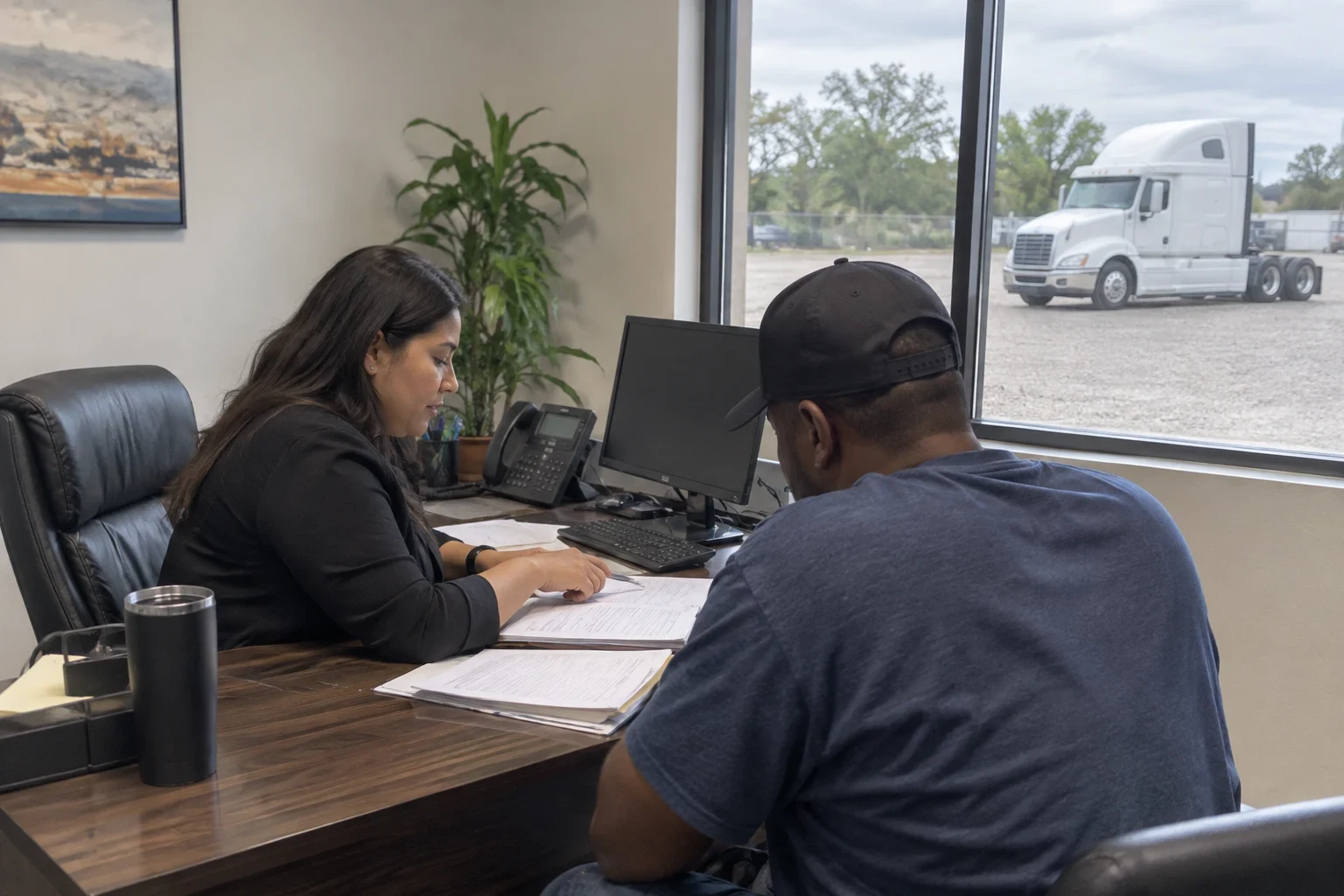
Insurance for your first year under your own authority
A new motor carrier has no loss history for underwriters to read. They price the unknown, which is why first-year quotes often surprise people. What they do look at is your CDL experience, your motor vehicle record, what you haul, how far you run and where the truck is parked at night.
We gather those details before we ask any insurer for a number. A quote built on a guess about your commodity or radius can fall apart at binding, or worse, leave a gap that shows up after a claim. Getting the description of your operation right is the part we take the most care with.
Most new authorities need primary auto liability insurance with a federal filing, plus motor truck cargo insurance for broker requirements. Many also carry physical damage insurance on a financed truck. We explain which pieces are required, which ones a broker or lender will ask for, and which are your choice.
What we set up for a new authority
- Liability coverage and the federal filing
- We place primary auto liability and make sure the insurer files the BMC-91 or BMC-91X with FMCSA under your DOT number. Until that filing posts, your authority cannot go active.
- Texas intrastate filings
- If you plan to haul inside Texas, intrastate authority with the state needs its own proof of insurance. We confirm which filings your operation needs so nothing sits unfiled.
- Cargo coverage that matches your freight
- Brokers set their own cargo limits and exclusions they won't accept. We read the policy wording against the freight you plan to haul, since a reefer or high-value load can fall outside a standard form.
- Physical damage on your truck and trailer
- If a lender holds the title, they will require it. We set the stated value and deductible so they reflect what the equipment is actually worth.
- Certificates of insurance for brokers
- Once coverage is bound, we send certificates to the brokers and shippers you name, listed the way their carrier packets ask.
Signs it's time to set up new authority coverage
Your MC number shows pending
FMCSA has granted the authority, but it won't activate until a liability filing arrives. This is the most common reason new carriers call us.
You're leaving a lease
Coming off a carrier's authority means their liability no longer follows your truck. The non-trucking liability (bobtail) insurance you carried as a leased owner-operator does not replace it.
A broker wants a certificate before dispatch
Carrier setup stalls without a certificate of insurance showing the right limits. We can work from the broker's packet directly.
Quotes came back declined or far from what you expected
Often the commodity, radius or garaging was described in a way that put you in a harder class. A second look at the details can change which markets will write you.
You're adding interstate runs
Moving from Texas-only hauling to crossing state lines changes the filings you need and sometimes the insurer.
What shapes a new authority premium
Every premium starts with how risky an underwriter believes your first year will be. The facts you give us carry real weight, so we take time to get them right. We can't quote a figure until we know your operation.
Driving experience and record
Years holding a CDL, and any tickets or accidents on your MVR, often matter more than anything else for a brand-new carrier.
What you haul and how far
General freight, dry van, hazmat, auto hauling and heavy equipment each sit in different classes. Local, regional and long-haul radius are rated differently too.
Equipment value and age
Physical damage pricing follows the value of the truck and trailer you insure and the deductible you choose.
Limits and coverage choices
Higher liability or cargo limits than the minimum, often asked for by brokers, add to the premium. Choosing only what your operation requires keeps it in proportion.
Garaging location and prior coverage
Where the truck sits overnight and whether you had continuous commercial coverage before both factor into the rate.
How a new authority policy comes together
- 1
A conversation about your operation
By phone, video or at our office, we go over your CDL years, driving record, truck and trailer, freight, lanes and where you'll park. Bring your DOT and MC numbers if you have them.
- 2
We match you with the right markets
Not every insurer writes new ventures, and those that do have different appetites. We send your submission only to markets that fit what you actually haul.
- 3
We walk you through the options
You see each quote side by side: limits, deductibles, exclusions and down payment. We point out wording that could matter later, like cargo exclusions or radius limits.
- 4
Binding and filings
Once you choose, we bind coverage and confirm the insurer has submitted your federal and any state filings. We check that they post, rather than assuming.
- 5
Certificates and first-year check-ins
We issue certificates to your brokers and stay available when you add a truck, change freight or prepare for your new entrant safety audit.
New authority insurance questions
Can I get insurance before my MC number is issued?
You can start the quoting process with your DOT number and application details. The filing itself goes in once the MC number exists. Starting early means you're ready to bind as soon as the authority is granted.
How soon does my authority go active after the filing?
Once the insurer submits the filing, it usually shows on FMCSA's system within a few business days. Activation also depends on your process agent filing and the protest period clearing. We watch for the filing to post and let you know.
Why is first-year coverage priced so much higher?
Insurers have no claims history on your company, so they rate on driver experience, freight and radius alone. A clean year of operating gives underwriters something to work with at renewal, though we can't promise how any insurer will price it.
Do I really need cargo coverage?
Federal rules don't require it for most general freight, but nearly every broker does. We check the limits in your broker packets and the freight exclusions in the policy so the coverage holds up when it counts.
I was leased on for years. Does that experience count?
Yes. Time driving under another carrier's authority counts toward your CDL experience, and a clean record from that period helps. Proof of the lease and prior coverage can open up more markets.
Ready to get your authority active
Tell us what you'll haul, where you'll run and what you're driving. We'll sort out the filings you need and shop coverage that fits from the start. You'll get your quote by phone.